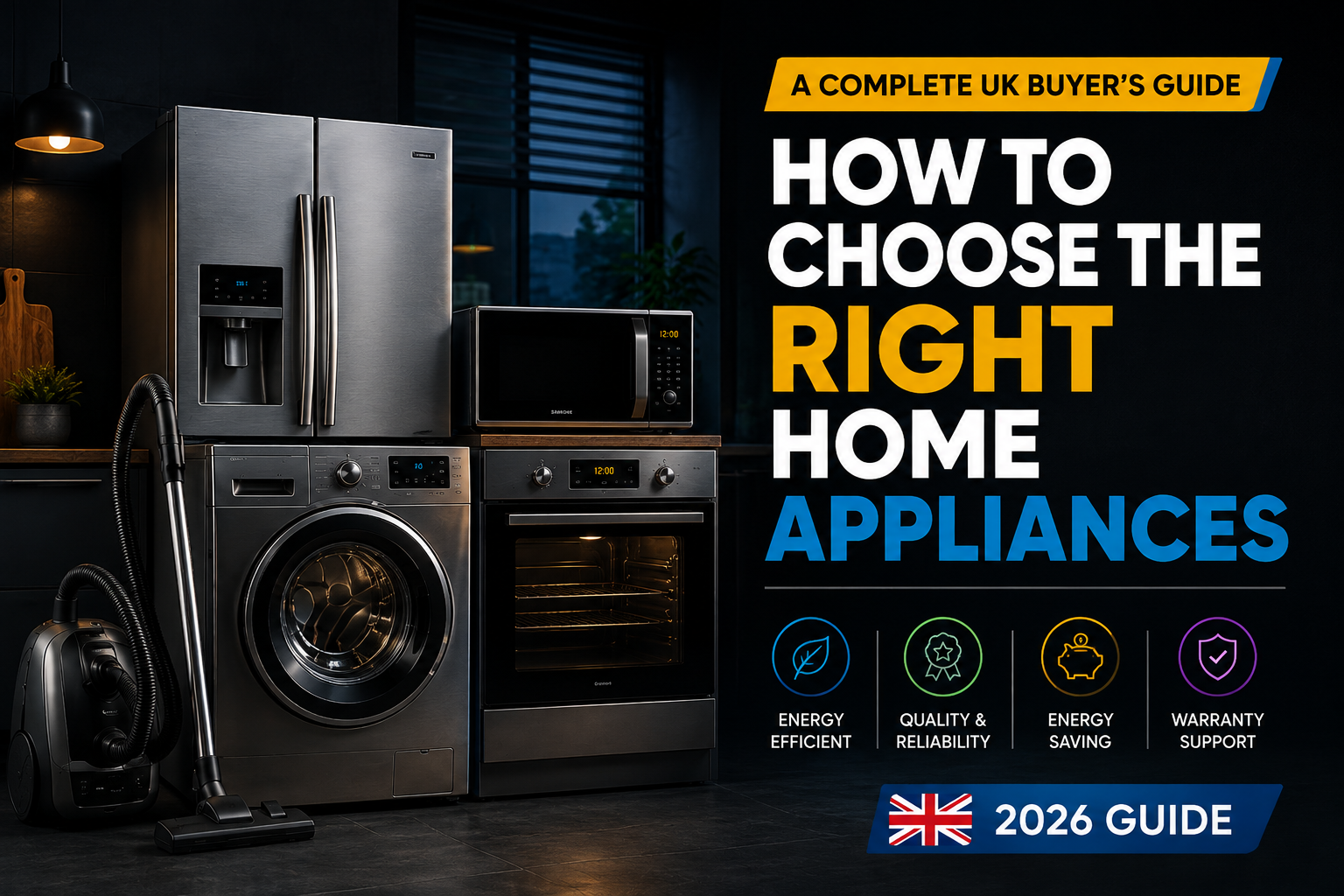
Buying a new home appliance is an investment that should make your daily life easier, save energy, and last for years. Whether you're replacing an old washing machine, upgrading your kitchen with a new oven, or buying appliances for a new home, choosing the right product can feel overwhelming. With hundreds of models, different brands, and a wide range of features, it's easy to spend more than necessary—or end up with an appliance that doesn't suit your needs. This guide will help you understand what really matters before making your purchase. Before comparing brands or prices, think about how you use the appliance. Ask yourself: For example, a family of five will benefit from a larger washing machine (9–10kg), while a couple may only need a 7kg model. Energy-efficient appliances may cost slightly more upfront, but they can significantly reduce electricity bills over time. Look for: Choosing efficient appliances isn't just good for your wallet—it also helps reduce environmental impact. UK households continue to prioritise energy-saving appliances because of long-term running costs. One of the most common mistakes is ordering an appliance that doesn't fit. Always measure: Double-check measurements before placing your order to avoid unnecessary returns. Modern appliances include dozens of features—but not every feature is worth paying extra for. Useful features include: Choose features that improve everyday convenience rather than paying for technology you'll rarely use. The cheapest appliance isn't always the best value. Instead, consider: A slightly more expensive appliance that lasts several years longer often provides much better value. Some appliances are plug-and-play, while others require professional installation. Examples include: Make sure installation requirements are clear before delivery day. Choosing a reputable appliance retailer gives you peace of mind. A good retailer should offer: Many UK buyers also value retailers that can provide advice before purchase and support afterwards, rather than simply selling the lowest-priced product.1. Start with Your Household Needs
2. Prioritise Energy Efficiency
3. Measure Before You Buy
4. Compare Features That You'll Actually Use
Washing Machines
Fridge Freezers
Ovens
5. Don't Choose on Price Alone
6. Think About Installation
7. Buy From a Trusted Retailer
How to Choose the Right Home Appliances: A Complete UK Buyer's Guide